The Trauma Root of Social Work Is Out Today!

The moment has finally arrived!
My next book is now officially available.

A book written for social workers and policy makers in that domain, and relevant for anyone doing social…work… (in other words, working with people in any way).

It explores how our stress response system influences the way we experience the world and respond to it, and how our experiences affect our brain development.
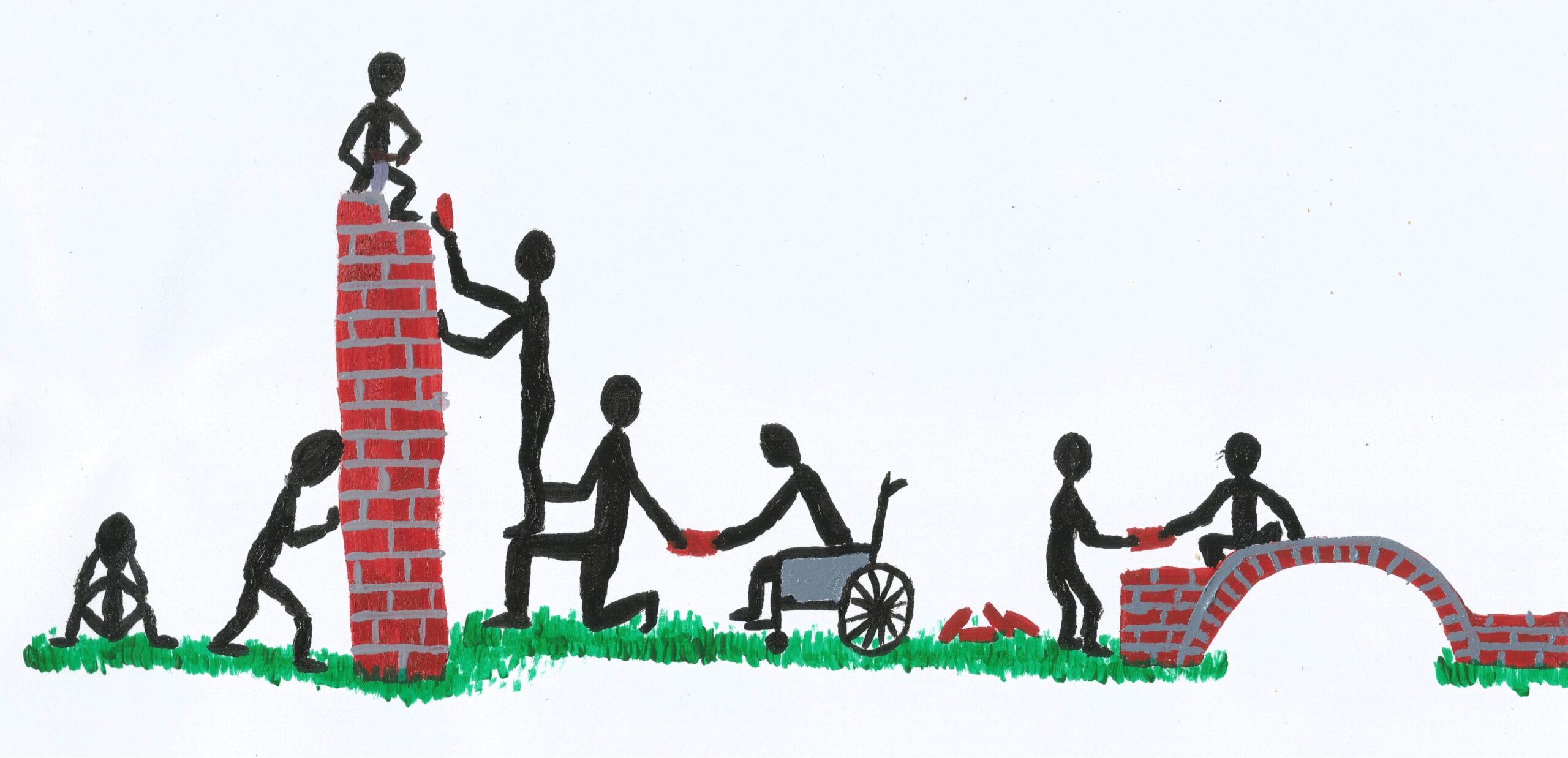
It looks at how experiences that have not been processed and integrated and feelings that are suppressed still have a significant effect on our functioning, and how this can be visualised by the trauma wall model.
From there, it explores the consequences of this and how this affects both the people we try to support and the professionals offering support.
And it looks the significant impact and ripples that can be caused by ‘breaking down trauma walls’ through enabling people to feel heard, like they belong, that they are safe and that trust is possible.
Using trauma-proactive approaches and identifying and addressing root causes – instead of focusing on symptom management – are crucial there. The cherry on top is that this comes with a significant return on investment.

The book brings together and gratefully builds on the work of many experts from a variety of field.

I look forward to hearing what people think of the book.

You can order a copy here, and if you use the code 26AFLY3, you get 20% discount:
https://www.routledge.com/The-Trauma-Root-of-Social-Work-Beyond-the-Trauma-Wall/Koenderink/p/book/9781041127406

But How Will We Pay for It?

The reform I propose, both in child protection and in wider social services, comes with a high return on investment in the long-term. (You can get a sneak peek at what I write about that in the book ‘The Trauma Root of Social Work: Beyond the Trauma Wall’ here: https://florencekoenderink.substack.com/p/return-on-investment-of-breaking) However, like all reform, in the short-term, investment is required for capacity building and service development. This will reliably raise an outcry of ‘it is impossible’, ‘where would we find the money?’ etc. This is understandable under the current attitude to the economy that seems to see people as a drain, which the economy needs to be protected from, and corporations and ultra-rich individuals as benefactors that must be protected and supported.

Challenging this attitude is a kind of radical reform in its own right. It is one that makes a lot of sense and creates a lot of financial room in national budgets due to its high return on investment that starts the moment action is taken based on the reversal of this belief. It is a hard sell, though, to propose taxing big business and the rich. Even though they currently, although they are in higher tax brackets, tend – in practice – to pay a tax rate considerably lower than those in the lowest tax bracket.

Continue reading “But How Will We Pay for It?”

Who Am I to…?

A few weeks back, I was talking to someone about Beyond the Trauma Wall and the book I am writing for it. They asked the very reasonable question ‘who are we to tell others…?’ This stuck with me and got me thinking. In a wonderful way, it helped me clarify my resolve for what I am doing.

Continue reading “Who Am I to…?”

Saving the Economy… Through Social Reform

Panic is growing because an economic crisis looms. Trade wars have been initiated, though there is a lot of uncertainty over who will go how far and when, as well as whether anyone will back down. The economic threat is compounded by extreme and sudden cutbacks in funding for foreign development projects, something that even in the medium term will prove not to save any money at all – quite the opposite – despite claims. In short, things look dire, and people feel desperate and powerless. Despite the dystopian feel of the moment, the very bleakness and desperation that makes it so might actually provide an opportunity to achieve real, sustainable change and improvement. We might have reached the point where politicians might just be desperate enough to be willing to listen to ‘crazy ideas’.

Continue reading “Saving the Economy… Through Social Reform”

Children Need More Than a Loving Family

There is much mention of children’s need for a loving family on social media and in advocacy campaigns. Particularly from those working in child protection reform. There is no doubt that children absolutely do need this. However, as someone who grew up in a loving family, I need to tell you that that is not enough.

Continue reading “Children Need More Than a Loving Family”

Reforming Child Protection Systems, Globally

Currently, child protection reform is generally understood as a move from residential to family-based alternative care and a need to build strong gatekeeping mechanisms. Moreover, many see it as something that needs to happen ‘over there, in the global South’, because ‘over here’ the system works, it just needs some fine-tuning and minor improvements. In this fine-tuning, the increasing trend of adding on trauma-informed practices is seen as a breakthrough and major improvement (don’t get me wrong, I’m not disputing that this is certainly a lot better than not having them). I have come to view this very differently.

Continue reading “Reforming Child Protection Systems, Globally”