
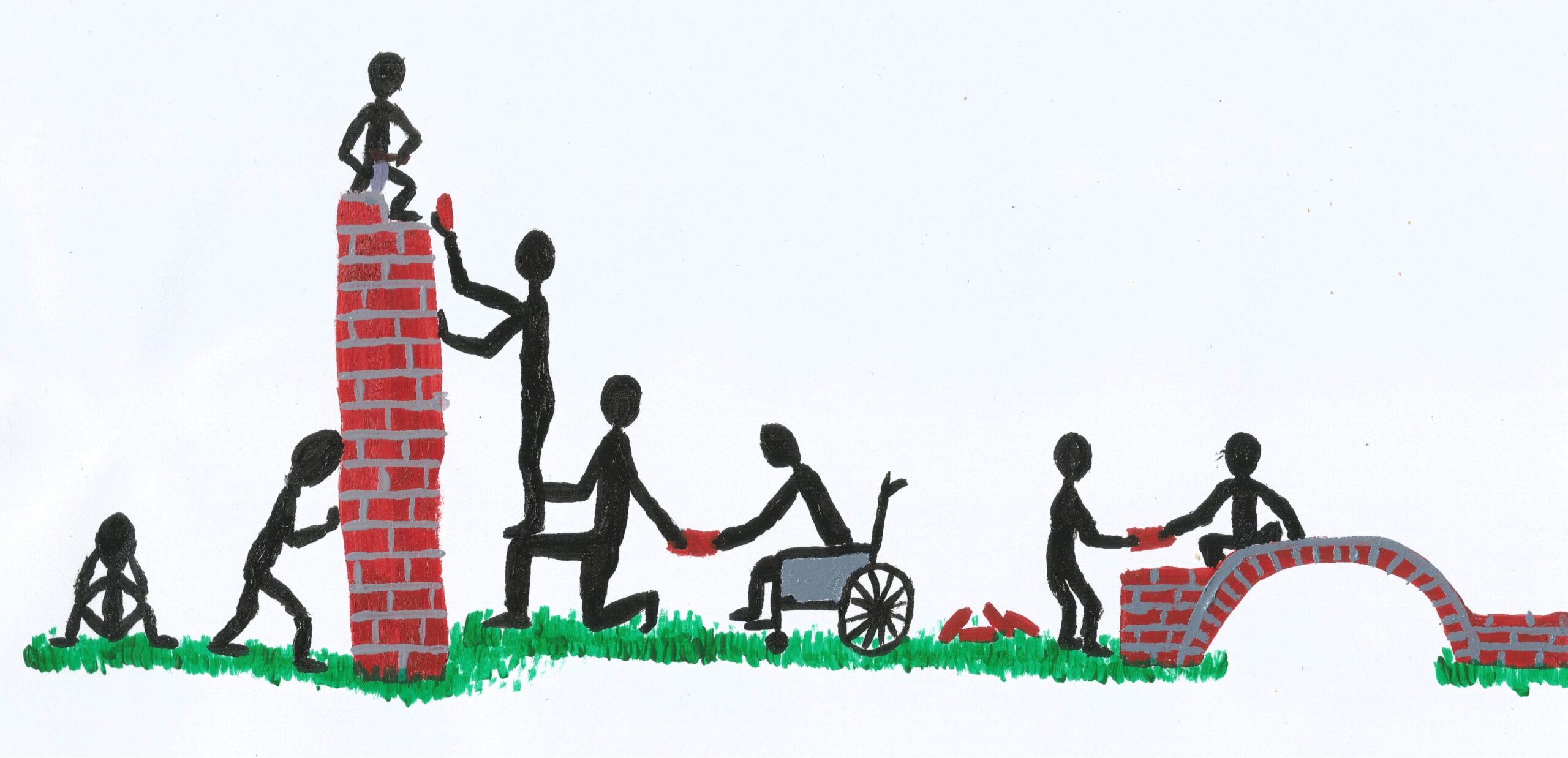
I provide training, workshops, and capacity building to enable practitioners, organisations, and systems to recognise how the trauma wall shows up in their practice and surroundings, how it can be broken down and the change that could bring. Recognising the trauma wall and the dynamics underlying protective coping mechanisms makes it easier to predict and understand the behaviours and reactions we encounter and to adopt a trauma-proactive approach in our work. Through this, we can start to break down the trauma wall and create a positive ripple effect.
The training provided is rooted in the research done for the books Understanding the Trauma of Children from Institutions. A training manual for case workers, (which you can find in the Web Shop on this site) and The Trauma Root of Social Work: Beyond the Trauma Wall (which will come out in the middle of 2026). It explains the mechanisms and adaptations in the brain and the stress response system connected to trauma and the long-term consequences for health, behaviour, and reaction, as well as ways to provide effective, sustainable support.
Who Is It For?
The training is relevant for all sectors involved in social support and development. This includes social work, education, the justice system, healthcare, and policy-making. Training is adapted to different contexts, cultures, and sectors as needed. Whether people are the policy makers, the managers, those working directly with the public, or provide ground-level support, for example, as a foster parent, truly understanding trauma walls and how to break them down can be transformational.
The intensive, interactive, in-person training programme is designed to help participants deeply understand the core principles involved and to connect the training content with their own work experience, through active engagement. Train-the-trainer programmes are also possible.
Comment from a training participant: ‘… the knowledge that was imparted was an eye opener just to realize that there is more to how and why children behave differently’
Training Options
The specific topics for training can be adjusted to the relevant context and audience. There is a possibility to mix and match whatever is most useful. Topics include:
- Brain Development
- How the Stress Response System Works and Affects Us
- What Is Trauma?
- Attachment and Attunement
- Felt Safety and Belonging
- Relationships of Trust
- Reactive Coping Mechanisms
- Challenging Behaviour
- Physical and Mental Health Effects (including addiction)
- Memory and Templates
- Co-regulation and Self-regulation
- Holding Space
- Being Trauma Proactive
- What the Trauma Wall Is and How to Break It Down
- The Case for Change
- Specific Application of the Above in Your Sector
For all of the shorter trainings, a certain degree of brain development and stress response system functioning will need to be covered. Because, in practice, if they have not covered this, the training will mostly consist of answering questions related to those mechanisms, while not much of the module topic can be covered in the time available.
It is possible to do training online, but there are challenges. For longer trainings, which online need to be divided into two-hour sessions to keep them manageable, the interactive recap at the start of each session can take up to half the session, so a lot more time is needed. Additionally, given the topic, to create a safe space, it is important that I am able to respond to non-verbal reactions of participants, meaning that cameras need to be on, and/or people need to be gathered in one space and keep an eye on each other.
Feel free to email [email protected] for more information and to discuss how the programme can be adapted to fit your needs.