
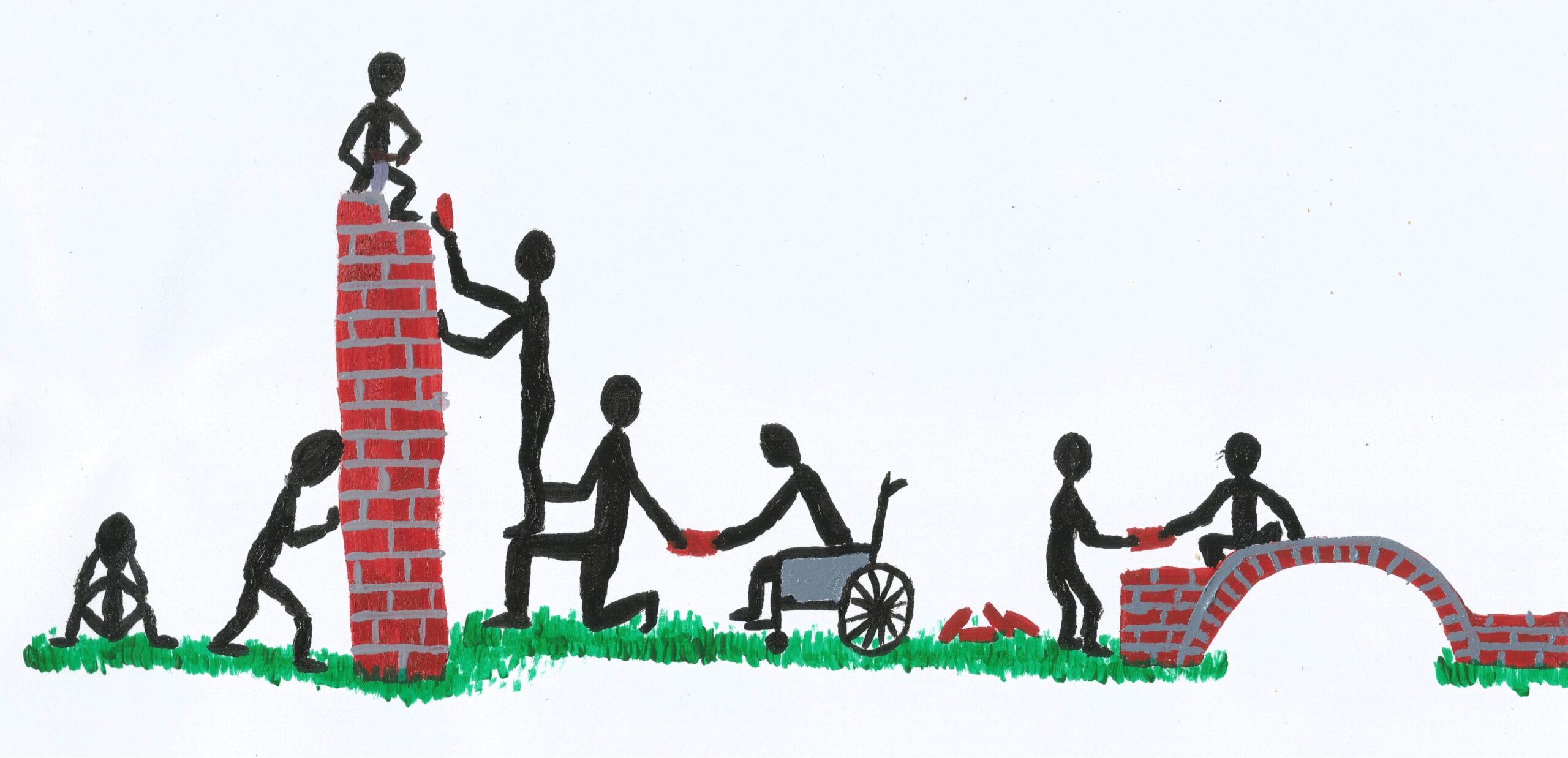
Through many conversations and other interactions with people about the Beyond the Trauma Wall Initiative, a clearer sense of its practical aims is emerging. Writing my upcoming book, ‘The Trauma Root of Social Work: Beyond the Trauma Wall’ has also contributed to that. It is through having very different conversations with people from different sectors and backgrounds that the generally applicable through-lines gradually become more visible. I want to share them with you here.
Continue reading “Different Aspects of the Beyond the Trauma Wall Initiative”Tag: #beyondthetraumawall
Online Trauma Training?
Those of us who offer training and capacity building related to trauma-informed (or trauma-proactive) practice and approaches are under pressure to offer online and self-paced programmes. I want to share some reflections on this.
Continue reading “Online Trauma Training?”But How Will We Pay for It?
The reform I propose, both in child protection and in wider social services, comes with a high return on investment in the long-term. (You can get a sneak peek at what I write about that in the book ‘The Trauma Root of Social Work: Beyond the Trauma Wall’ here: https://florencekoenderink.substack.com/p/return-on-investment-of-breaking) However, like all reform, in the short-term, investment is required for capacity building and service development. This will reliably raise an outcry of ‘it is impossible’, ‘where would we find the money?’ etc. This is understandable under the current attitude to the economy that seems to see people as a drain, which the economy needs to be protected from, and corporations and ultra-rich individuals as benefactors that must be protected and supported.
Challenging this attitude is a kind of radical reform in its own right. It is one that makes a lot of sense and creates a lot of financial room in national budgets due to its high return on investment that starts the moment action is taken based on the reversal of this belief. It is a hard sell, though, to propose taxing big business and the rich. Even though they currently, although they are in higher tax brackets, tend – in practice – to pay a tax rate considerably lower than those in the lowest tax bracket.
Continue reading “But How Will We Pay for It?”Who Am I to…?
A few weeks back, I was talking to someone about Beyond the Trauma Wall and the book I am writing for it. They asked the very reasonable question ‘who are we to tell others…?’ This stuck with me and got me thinking. In a wonderful way, it helped me clarify my resolve for what I am doing.
Continue reading “Who Am I to…?”The Ability to Offer Support with Trauma
When someone has experienced trauma, or an event so overwhelming that it has the potential to become trauma if it is not processed, they are in need of support. To be able to process either current traumatic stress or past trauma, we need to feel safe and supported at a deep level. To experience this safety, we need to feel connected with other people, to not feel alone and helpless. However, it is not a simple thing to support someone with trauma, and not everyone is able to do so.
Continue reading “The Ability to Offer Support with Trauma”The Blog as a Writing Sandbox
Since the launch of this website, I have been using the Beyond the Trauma Wall blogs as a sandbox to develop and put words to ideas that were rising as I was doing the research for my new book ‘The Trauma Root of Social Work: Beyond the Trauma Wall.’ This has been very helpful not to lose the thoughts and inspirations that arose while I was not ready yet to put pen to paper (aka start typing). Now that I am working on the first draft of the manuscript, it has been a little quiet here, since my writing is happening elsewhere. However, I am not done sharing my thoughts and work.
Continue reading “The Blog as a Writing Sandbox”The Pushback Against a Trauma Focus in Social Work
While the understanding of the role of trauma in some aspects of social work is increasing, and with that, the training offered and policies changed, not everyone sees this as a positive development. Others do welcome the change in principle, but are disappointed or frustrated with the practice, or worried about the feasibility. That is why I want to address some of the objections that are raised against trauma-informed practice in social work.
Continue reading “The Pushback Against a Trauma Focus in Social Work”The Whys of Reform to Include a Trauma Lens
It is useful to have a look at why it is necessary to have reforms of various sectors to make sure that they are truly trauma-informed. As well as to point out that while this can seem like a daunting task, it is very feasible and worthwhile.
Continue reading “The Whys of Reform to Include a Trauma Lens”If Only We Could Prevent Trauma…
This tends to be said rhetorically. It is taken as a given that we can’t. Often trauma is seen as something inevitable, inescapable, and to be lived with. Similarly, too often, trauma awareness or trauma-informed practice is seen as at best recognising and having understanding for the trauma experienced by someone. While I acknowledge that trauma cannot be fully eradicated (people will die, accidents and disasters will happen and people will be affected by that) my belief is that a very large proportion of trauma can be prevented, just not overnight.
Continue reading “If Only We Could Prevent Trauma…”The Need for (Particular) Addiction
Through the research I am doing for the Beyond the Trauma Wall book, my insight into the link between addiction and attachment is crystalising. A few years ago, I started to see a deeper root cause already, I would like to take this a bit further now.
Continue reading “The Need for (Particular) Addiction”