
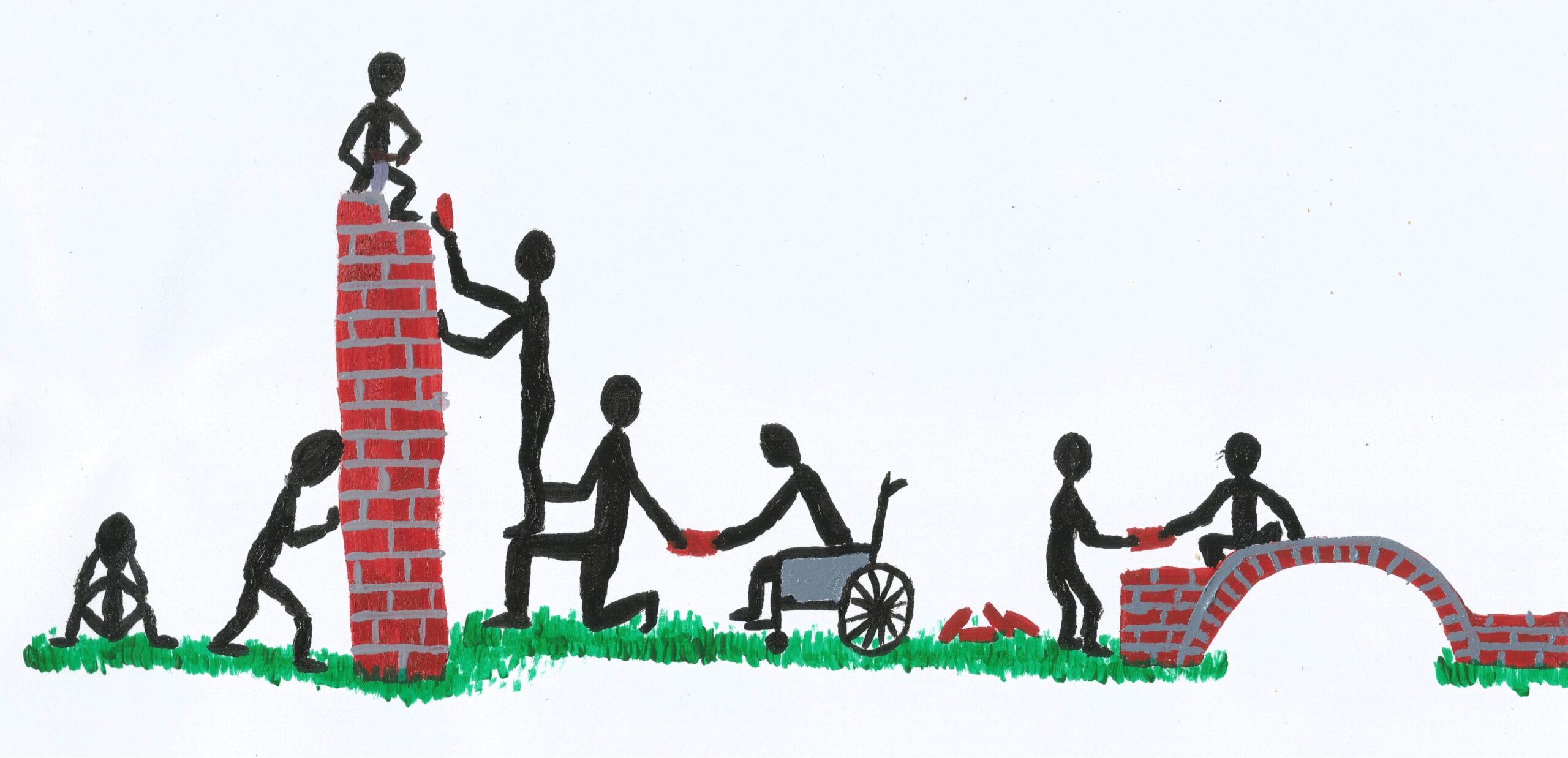
With this post, I start a new ‘sandbox’ period of sharing ideas for the book I’m starting to write, with the working title: ‘Why & How Today’s World is Keeping Us Stressed: And how to get beyond the trauma walls’. I invite thoughts and constructive criticism on these thoughts-in-development in the comments. Once the manuscript starts to develop more definite forms in the second draft round, I will make excerpts available again on Substack if enough people are interested to become paid subscribers to read them.
Here are some words on how war not only causes trauma, but also flows from trauma.
When we are aware of what protective coping mechanisms look like, war is the clearest and most blown up version of them. Yuval Noah Harari points out that it is both dangerous to think that war is inevitable, because that will turn into a self-fulfilling prophecy but equally to think that war is impossible, since history has disproven that.[i] What are the main reasons for leaders to initiate a war? They may not be consciously aware of it, but generally these are:
- Expanding territory:
- If I rule a bigger region, everyone will have to see and believe how powerful and important I am – a bid to feel important enough to matter
- If I create a buffer zone around my country, we will truly be safe – a bid for safety and security
- It’s a survival of the fittest, if I don’t show people that I will come for them, they will come for me – a bid for safety and the appearance of strength[ii]
- Pre-emptive strikes:
- I have to hit them before they have a chance to hit us – reactive flight-or-fight response
- Everyone thinks I’m weak and won’t do it – shame response and posturing to hide it
- Economic interests:
- If I don’t protect my access to these resources, I will lose wealth and popularity – trying to counter the fear that comes from scarcity mindset and/or a need for approval
- Without these resources, everyone will say that I destroyed the economy – fear of failure and disapproval
- Eradicating a people through genocide or ethnic ‘cleansing’:
- If one of their babies survives, it will grow up to kill me – acting on fear that generally stems from historical and/or intergenerational trauma
What all of these reasons for war have in common is that in order to justify killing ‘the other’, the enemy has to be seen as other to the point of dehumanisation. Not just the enemy, however. The ‘enemy’ is not the only one who is going to get killed. ‘Our’ soldiers sent into battle to execute the war will not all come home alive either. To be able to send them, it is necessary to not see them as human either. Therefore, it is much more convenient to talk about ‘troops’ going into battle, rather than ‘soldiers’ or ‘men and women’. This makes it easier to not think too deeply about their humanity and the magnitude of the sacrifice that they have to make.
It becomes increasingly easy to dehumanise the enemy now that war rarely involves hand-to-hand combat. Now that bombings and drone attacks are the main modes of fighting, even the people doing the fighting encounter the other side less and less. This distance and lack of personal engagement in war makes dehumanisation almost inevitable and greatly increases the risks of human rights violations, breaches of the Geneva Convention, and outright genocide, as we have been witnessing in recent years. Israel is not only killing Palestinians indiscriminately, as if that were not bad enough, it also makes a point of leveling historic buildings and records, attacking the culture and identity. Similarly, President Donald Trump has repeatedly threatened to ‘wipe out a civilisation’, referring to Iran. While this has not happened, US forces have bombed an Iranian girls’ school.[iii] Trauma walls get in the way of seeing either the enemy or ‘our’ troops as human or to recognise anything as more important than to reactively strike out, secure territory and resources, and prove our strength, power, and value. This is why it is so dangerous to have leaders who carry unprocessed trauma. Not only they but all of us are at the mercy of the reactive activation of their protective coping mechanisms.
[i] Yuval Noah Harari, 21 Lessons for the 21st Century. Jonathan Cape, London, 2018, p180.
[ii] Yuval Noah Harari, Nexus: A Brief History of Information Networks from the Stone Age to AI. Fern Press, 2024, p393.
[iii] Simon Jenkins, Ukrainian cathedrals, Gaza’s archives, Iranian squares – modern war is systematically erasing human history. The Guardian, August 13 2026.