
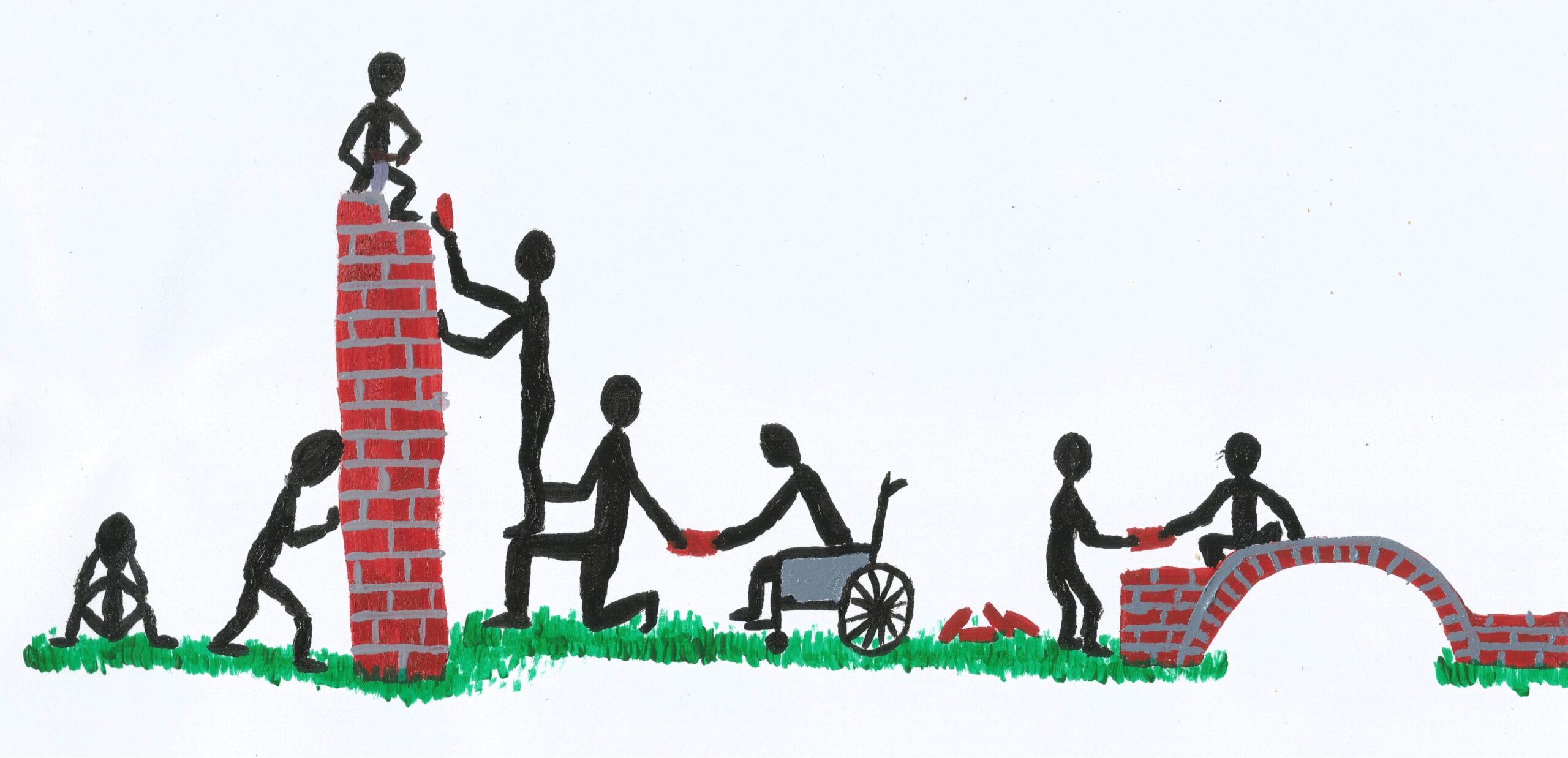
When someone has experienced trauma, or an event so overwhelming that it has the potential to become trauma if it is not processed, they are in need of support. To be able to process either current traumatic stress or past trauma, we need to feel safe and supported at a deep level. To experience this safety, we need to feel connected with other people, to not feel alone and helpless. However, it is not a simple thing to support someone with trauma, and not everyone is able to do so.
Part of why people struggle to support someone who feels overwhelmed by feelings and memories connected to a difficult and sometimes gruesome experience is that they may not have the training to know what to do. Part of it is also that to be able to tolerate and accept the overwhelming feelings of another person, we have to be able to tolerate and accept our own. Most of us need to do some processing and healing from our own experiences before we are able to do that.
Unfortunately, laypeople or professionals whose job description is not specifically to work with people who are traumatised are not the only ones not always able to provide the support needed. Surprisingly, not all psychologists, psychiatrists, or counsellors are equipped to provide appropriate support to people with stored trauma. Felt safety and relationships of trust are essential for effective therapy. However, even in these professions, there is still a disturbing lack of training as part of qualification and professional development courses when it comes to supporting people with trauma.
Too often do people go to multiple mental health professionals without ever feeling they make progress or feel any better. Several things can get in the way of progress through professional psychological support, such as:
- Not going beyond symptom management – instead of using things such as mindfulness techniques to combat anxiety as a starting point to build tolerance for accessing emotions and memories, treatment may consist of only this.
- A failure to identify cognitive or spiritual bypassing.
- A failure to establish felt safety and a relationship of trust – either due to a clash of character (people just rubbing each other the wrong way), or lack of competence.
- The therapist or counsellor being triggered by the patient and/or allowing them to manipulate them – something that is an understandable protective strategy on the part of the patient, one that therapists should be equipped to handle.
- Not looking at the trauma root of mental health challenges or psychiatric diagnoses.
- Focusing on symptom management, preferably through cheaper and faster methods like solely relying on medication.
Unfortunately, having multiple bad experiences trying to get professional help is not just annoying. It can be very harmful. People who have been to one or more therapists without ever feeling they are making any progress are likely to become extremely reluctant or even resistant to trying again. Each failed attempt raises the barrier to trying again higher. It can also lead to the conclusion that we are just beyond help or undeserving of help. An example of this is a young woman who was so affected by her stored trauma that she felt it was impossible to continue living: ‘She did open up on one occasion. She was 14 at the time, and receiving treatment for an eating disorder. But the healthcare professional she confided in did nothing, which led [her] to conclude that what was happening to her wasn’t serious enough. A new truth nestled in her mind: she was worthless, a drama queen, an attention-seeker. And the abuse was her own fault. She could have said no, right? She made a pact with herself: never again would she share what had happened with anyone.’[iii]
This is important to be aware of and keep in mind. It does not mean we should just give up on seeking professional psychological support when it is needed. What it does mean is that it is necessary to do some research and look for recommendations from people with similar challenges. It also means it is important to take the introductory session seriously as a vetting process. This session has the purpose of getting to know each other and seeing whether the therapist might be able to provide the safety and support needed to make progress and start healing.
Please share this blog to help spread awareness.
[iii] Bakker, S. (2024). How a young Dutch woman’s life began when she was allowed to die. The Guardian, 17 December 2024.