
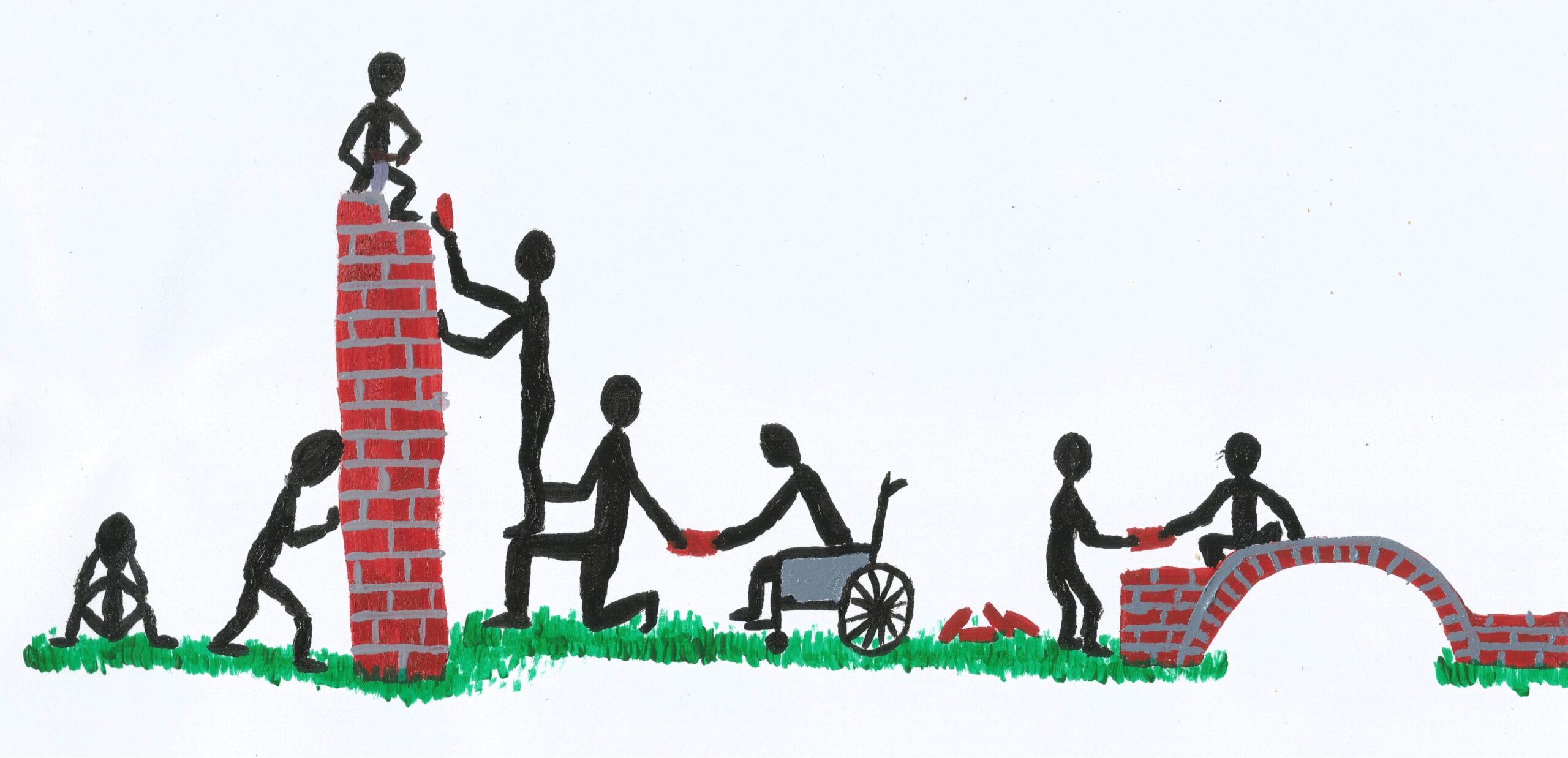
I believe that awareness of such things as the effects of the activation of the stress response and how to hold space could and should be taught in schools. Because of that and because I was asked this week how I break down very complicated things so that they are understandable without losing the true meaning, I thought I’d give an example of how I would explain dysregulation and coregulation to my four-year-old niece:
‘All of us are filled up with love (and being lovable). But sometimes, when things all feel too much, and you feel very angry or sad or scared, it can be really hard to still see the love (and lovability) inside of you. And that can be scary, because when you can’t see the love, it feels like other people can’t see it either, and that maybe they won’t love you anymore. I (and you mum, you dad, etc.) can always see the love inside you, even when you can’t. I always love you, also when you are very sad or scared or angry.
‘When you feel too much and cannot see the love inside yourself, I will stay with you, so you are not alone. And I will offer a little of the love inside me to you. Not because you do not have enough in you, I can see that you do. But because the love I offer can turn into a little light that helps you see the love inside of you too. When you start to see the love inside yourself again, even through the anger or sadness or fear, the too-muchness slowly becomes less big. Slowly things start to look and feel more alright again.’
A small example of how, when you start to really understand the processes and mechanisms, it becomes possible to translate it in a way that is understandable at different developmental levels and in different cultural contexts. That is how you gradually break down the trauma wall and set positive ripples in motion.
Please spread this blog to help spread awareness.