
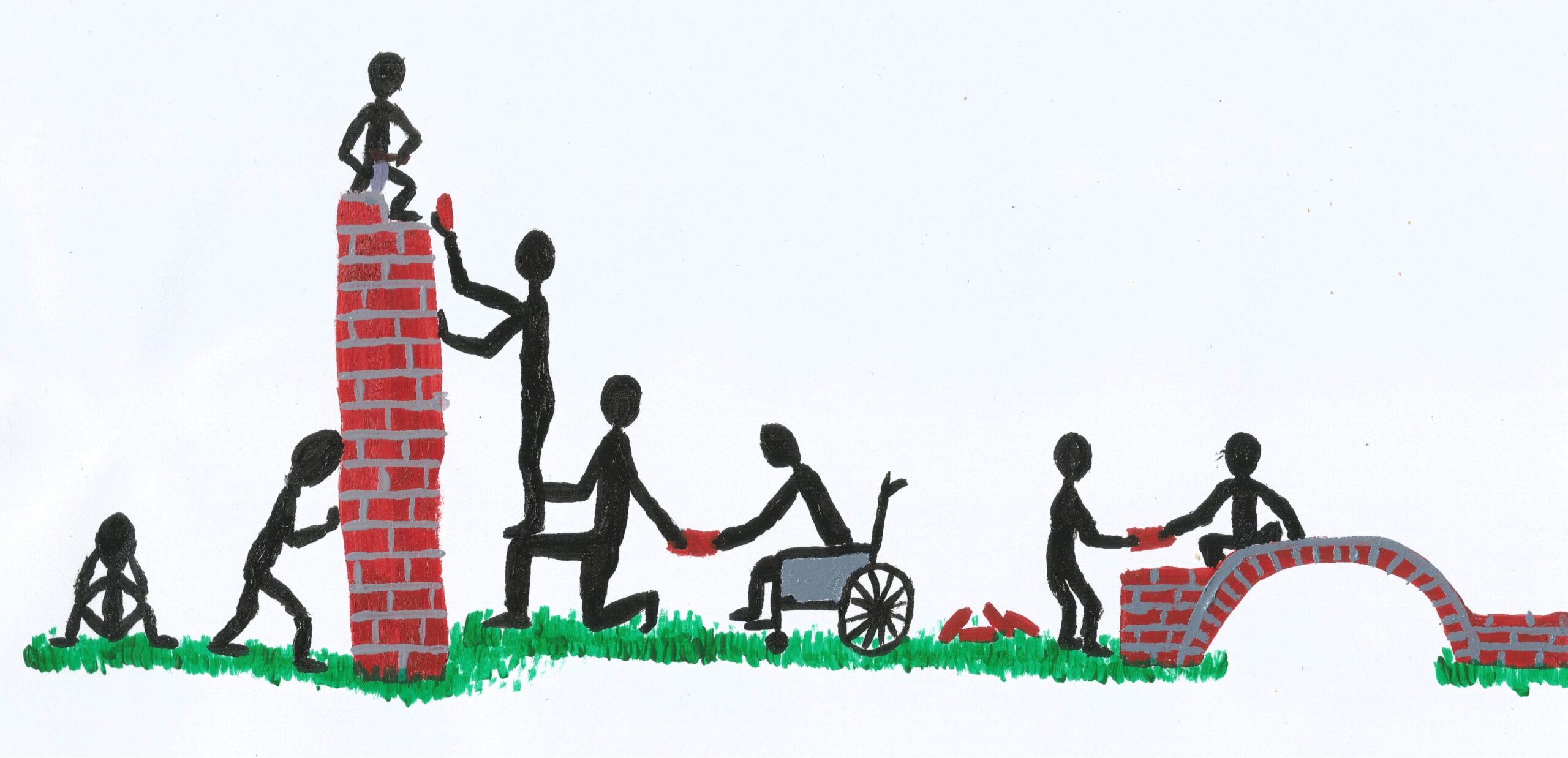
A few weeks back, I was talking to someone about Beyond the Trauma Wall and the book I am writing for it. They asked the very reasonable question ‘who are we to tell others…?’ This stuck with me and got me thinking. In a wonderful way, it helped me clarify my resolve for what I am doing.
I recognise the thinking behind it. ‘Who am I’ was the leading consideration for almost 30 years of my life, usually holding me back from what I felt I should do. This changed abruptly, nearly 20 years ago, when a baby died as a direct result of my holding back because of ‘who am I.’
At the time, I was supporting capacity building in a residential institution for medically fragile babies and toddlers. I did not have a lot of medical knowledge yet at that time, but I was learning quickly because no part of the care needed there could be disconnected from medical needs. One day, I recognised signs of dehydration in a newborn baby and had some idea of what needed to happen to prevent the situation from escalating. However, I brought it up as a question, and nothing was done. I asked for advice from more senior staff in a different location, but communication was subject to delays. I strongly felt action should be taken. But I also strongly felt ‘who am I to push for action when I am completely new to this and the people here have been dealing with cases like this for years?’ I did not insist, and the baby deteriorated. He was eventually hospitalised, but it was too late, and he passed away.
At that moment, it struck me not to ask ‘who am I to…’ but ‘who am I not to…?’ There is a safety in ‘who am I to…’ Because if you get involved and make mistakes, which will happen, you will be held responsible for those mistakes and their outcomes. If you do not get involved, you are not seen as being responsible, because you did nothing to cause the outcome. However, I still know. I know I am responsible for the death of that baby through my inaction. With the knowledge I had at the time, I might not have been able to save his life, but I could have given him a chance. I chose not to, and who was I to make that choice? It changed my approach. From then on, in medical situations where I had an understanding of what was needed, I would step up and insist if others did not. No baby has died of dehydration under my responsibility since – and many have been at risk.
Once the implications were brought home in such a blunt way, in a real life-and-death sense, it changed my attitude to ‘who am I to…?’ in a broader, more general sense too. And when it comes to the cause of Beyond the Trauma Wall – which is not about directly holding anyone’s life in my hands – ‘who am I not to do this?’ resonates much louder for me than its opposite. I believe that spreading understanding of what the trauma wall is, why it is important to break it down and that it is feasible to do so, and then working together to implement this, has a real potential for solving big problems and helping many people improve their quality of life. Who am I not to help spread that understanding and work towards breaking down trauma walls?
Hopefully, you will feel the same and will join me in this endeavour.
Please share this blog to help spread awareness.
If you want to read along with the book I am writing: The Trauma Root of Social Work: Beyond the Trauma Wall, you can find excerpts of early drafts on Substack: https://florencekoenderink.substack.com/