
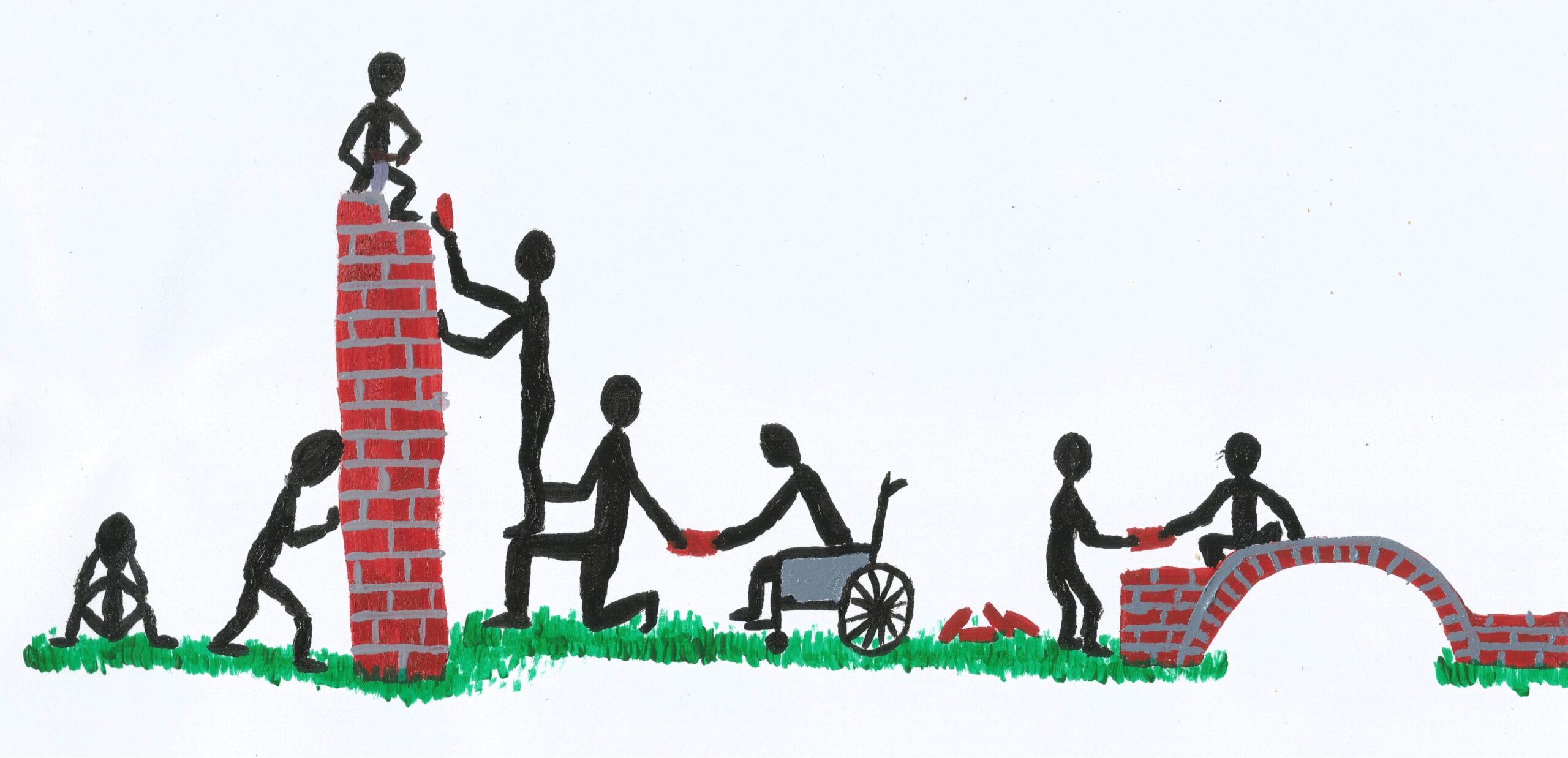
I provide training, workshops, and capacity building to enable participants to understand the behaviours and reactions they encounter and to adopt a trauma-proactive approach in their work. Through this, they can start to break down the trauma wall and create a positive ripple effect.
The training provided is based on the research done for the books Understanding the Trauma of Children from Institutions. A training manual for case workers, (which you can find in the Web Shop on this site) and The Trauma Root of Social Work: Beyond the Trauma Wall (which will come out in the middle of 2026). It explains the mechanisms and adaptations in the brain and the stress response system connected to trauma and the long-term consequences for health, behaviour, and reaction, as well as ways to provide effective, sustainable support.
Who Is It For?
The training is relevant for all sectors involved in social support and development. This includes social work, education, the justice system, healthcare, and policy-making. Training is adapted to different contexts, cultures, and sectors as needed.
The intensive, interactive, in-person training programme is designed to help participants deeply understand the core principles involved and to connect the training content with their own work experience, through active engagement. Train-the-trainer programmes are also possible.
Comment from a training participant: ‘… the knowledge that was imparted was an eye opener just to realize that there is more to how and why children behave differently’
Training Options
The table below gives an overview of some training content options, though other possibilities can be discussed.

For all of the shorter trainings, ‘Mechanisms of trauma’ should be completed by the participants before starting other modules. This is because, in practice, if they have not covered this, the training will mostly consist of answering questions related to those mechanisms, while not much of the module topic can be covered in the time available.
It is possible to do training online, but there are challenges. Because it has to be divided into two-hour sessions and the interactive recap can take up to half of each session, a lot more time is needed. Additionally, given the topic, to create a safe space, it is important that I am able to respond to non-verbal reactions of participants, meaning that cameras need to be on, which in some places is challenging due to connectivity.
Feel free to email [email protected] for more information and to discuss how the programme can be adapted to fit your needs.