
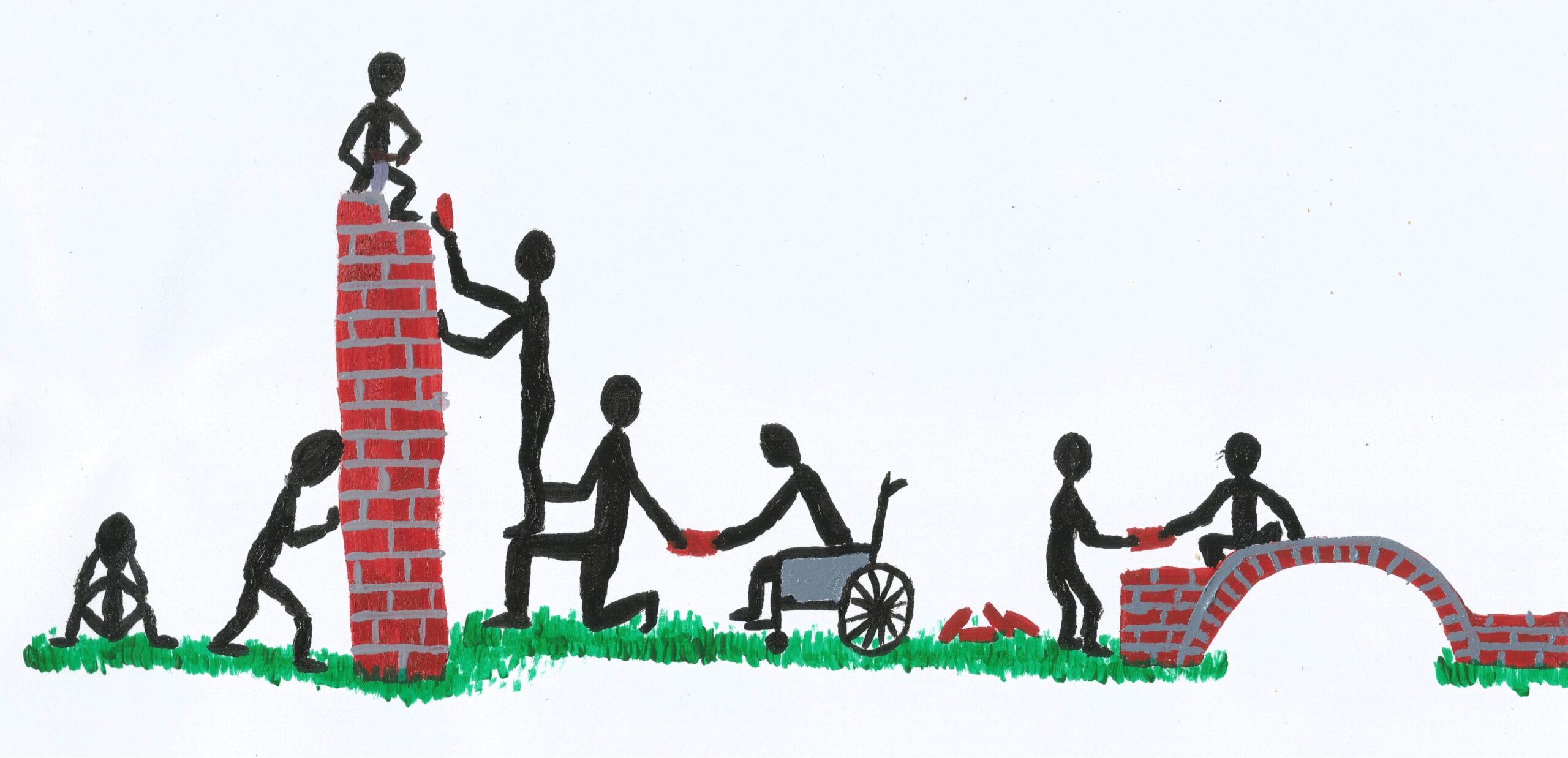
This tends to be said rhetorically. It is taken as a given that we can’t. Often trauma is seen as something inevitable, inescapable, and to be lived with. Similarly, too often, trauma awareness or trauma-informed practice is seen as at best recognising and having understanding for the trauma experienced by someone. While I acknowledge that trauma cannot be fully eradicated (people will die, accidents and disasters will happen and people will be affected by that) my belief is that a very large proportion of trauma can be prevented, just not overnight.
Because we have only relatively recently started to understand the far-reaching impact of unresolved trauma on our mental and physical health and on our behaviour and reactions, it is not surprising that it seems like something we just have to live with. As well as that it is something that simply happens. However, as I put forward with the Trauma Wall Model, actually a lot of trauma comes from entirely preventable causes. Such as poverty, oppression, marginalisation, institutionalisation, neglect, homelessness, from experiencing violence, war, involuntary separation from family and community, and dispossession, to name but a few. And before anyone starts to shout that these things are just a part of life, inevitabilities, they really are not. More often than not they are inflicted on other people by those carrying unresolved trauma through coping strategies that were once protective but are now harmful – to themselves and/or those around them. Benjamin Perks’ book Trauma Proof, for example, provides various simple and practical ways to prevent childhood trauma.
In a way, this is good news. At least if we are willing to step up and act on this understanding, rather than stop at acknowledging ‘Oh, that’s why they do that.’ Trauma is not a burden that inevitably has to be carried to the grave. With adequate support and relational connection, the journey to resolve trauma can start. This will not make life as if the traumatic event never took place and it is not an easy journey. However, it is one that pays dividends in many ways. Life becomes more manageable and has more room for joy and happiness for the person carrying the trauma when it starts to be resolved. There are significant positive effects on both mental and physical health – because unresolved trauma is not just a psychological issue, it is a biological one too. Moreover, a ripple effect is started when people work on resolving their trauma.
When trauma has been processed, it is not passed on anymore. This goes for intergenerational trauma: parents inadvertently passing on their trauma to their children, on and on down the generations. It also applies to interpersonal trauma: when no longer in survival mode, fear of the unfamiliar, and of change, together with a sense of perpetual threat, reduces. This leads to less reactive aggression and violence, discrimination and marginalisation alongside a greater ability and willingness to socially engage with others. Preventability even applies to trauma caused by international conflict and war: when we do not predominantly have leaders who carry significant unresolved trauma leading to their visceral need to lash out at other people and countries, hold full control at all costs, and prove to the world that they ARE important and valuable, war, political and economic instability etc. would decrease significantly.
In other words, ensuring proper support to recognise and resolve trauma in itself is a way to prevent a lot of trauma from occurring down the line. It is not a simple thing to achieve and the change will not happen overnight. However, if we commit to educating professionals and the public about what trauma is, what it looks like and how people can be supported to overcome it, together with investmenting in ensuring this support, we can create ripples that can turn into tsunamis over time.
So, no, not all trauma can be prevented. However, all trauma can be resolved, at least to a certain extent, with the proper support. Most importantly: ensuring people have support and encouragement to resolve their trauma is an incredibly potent way of preventing new trauma on a large scale.
Please share this blog to help spread awareness.